
WhatsApp has officially begun rolling out one of its most revolutionary features — third-party chat integration — exclusively for users in the European region. This update allows WhatsApp users to send and receive messages from other supported apps directly within WhatsApp, marking a historic shift in how global messaging platforms operate. The move comes as part of WhatsApp’s compliance with the European Union’s Digital Markets Act (DMA), which requires major tech platforms to support interoperability and provide more open communication systems for consumers.
For millions of users, this means more flexibility, seamless messaging, and the freedom to stay connected without switching between multiple apps. It also represents a new era for the messaging industry, making communication more unified and user-centric across platforms.
Why This Update Is a Big Deal for Messaging Apps
For more than a decade, WhatsApp operated as a closed and independent messaging ecosystem. Users could chat only with other WhatsApp users, and no external app could connect with or send messages into WhatsApp’s environment. This created isolated messaging platforms where communication was locked within single apps.
The new third-party integration breaks those boundaries for the first time.
Under this update, users can now communicate with people using other supported apps — without needing to download them. This represents a major shift in the global communication landscape and could influence how messaging apps operate for years to come.
EU’s Digital Markets Act (DMA): The Force Behind the Change
The Digital Markets Act enforces strict rules on Big Tech companies classified as “Gatekeepers,” which includes Meta (the owner of WhatsApp). According to the DMA, gatekeeper platforms must allow interoperability to ensure fair competition and more user choice.
To comply, WhatsApp had no option but to provide technical access for third-party messaging apps. This is the reason why the feature is being released only in Europe and not globally—at least for now.
WhatsApp Starts Testing the Feature in Beta
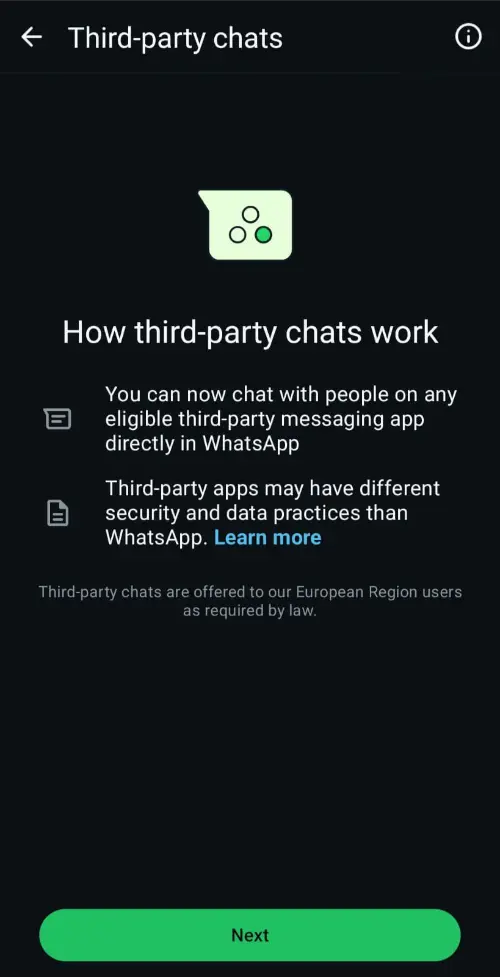
As part of the initial rollout, WhatsApp has included this feature in its latest iOS and Android beta versions. Some selected users in the EU can now see a new option labeled:
Settings > Account > Third-Party Chats
This allows them to activate or deactivate the feature at any time. Since this is still in early testing, stability improvements and new compatible apps are expected in future updates.
How the Third-Party Chat Feature Works
WhatsApp’s third-party messaging system works by allowing external apps to connect securely to WhatsApp using a standardized protocol. Once enabled, users can carry out basic messaging tasks with people on other platforms.
The feature supports:
- Standard text messages
- Images and photos
- Videos
- Voice notes
- Files and documents
At this stage, WhatsApp is focusing on simple one-on-one communication rather than group chats.
What Features Are Not Supported Yet?
Because this feature is still in its early stages, many advanced WhatsApp features are not included for third-party interactions.
These unavailable features currently include:
- Stickers
- Reactions
- Live locations
- Status updates
- Channels
- Disappearing messages
- Broadcast lists
These limitations may gradually be removed as WhatsApp expands its interoperability framework.
User Control and Message Management Options
One of the biggest advantages of this update is that users have complete control over how they manage incoming third-party messages.
WhatsApp offers two options:
- Merge third-party messages with WhatsApp chats
- Keep them in a separate inbox labeled “Third-Party Chats”
This helps users avoid confusion and stay organized while adapting to the new system.

End-to-End Encryption Still Applies — With Some Conditions
WhatsApp is famous for its end-to-end encryption (E2EE), and Meta confirmed that even third-party messages sent into WhatsApp will remain encrypted. However, this security guarantee applies only if the external messaging app meets WhatsApp’s strict encryption standards.
This ensures that:
- Messages remain private
- Hackers cannot intercept them
- Meta cannot read the content
But WhatsApp also warns users to be cautious about the privacy policies of external apps since the security of outgoing messages depends on the third-party provider.
What Happens to Blocked Contacts?
A surprising limitation has been revealed:
If you block someone on WhatsApp, that person can still message you using a third-party app.
This is because blocking works only inside WhatsApp’s internal system and does not control external apps. WhatsApp is expected to address this concern in future updates.
First Messaging App to Support WhatsApp Integration: BirdyChat
The first official third-party app to successfully integrate with WhatsApp under the DMA is BirdyChat. It met WhatsApp’s encryption and security requirements, making it the earliest platform to offer cross-app messaging with WhatsApp users.
More apps are expected to join soon, once they complete the technical and privacy approval process.
Why WhatsApp Launched the Update Only in Europe
WhatsApp’s decision to restrict this feature to European users comes down to strict regulatory enforcement from the EU. Regions outside Europe are not yet subject to similar rules, so WhatsApp has no obligation to introduce cross-app messaging worldwide.
Key reasons for Europe-first launch:
- Legal compliance with the DMA
- Testing ground for global expansion
- Technical challenges of interoperability
- Security concerns outside regulated European markets
However, experts believe that if interoperability becomes successful and popular in Europe, it may spread globally in the future.
How This Update Helps European Users
The introduction of third-party chats is extremely helpful for users in several ways:
1. Reduced App Overload
Users no longer need to keep switching between multiple messaging apps.
2. Easier Communication With Different Platforms
People using Telegram, Viber, Messenger, or BirdyChat can all communicate effortlessly.
3. Better Accessibility
Users who prefer one main app can now centralize their communication.
Impact on Businesses and Customer Support Teams
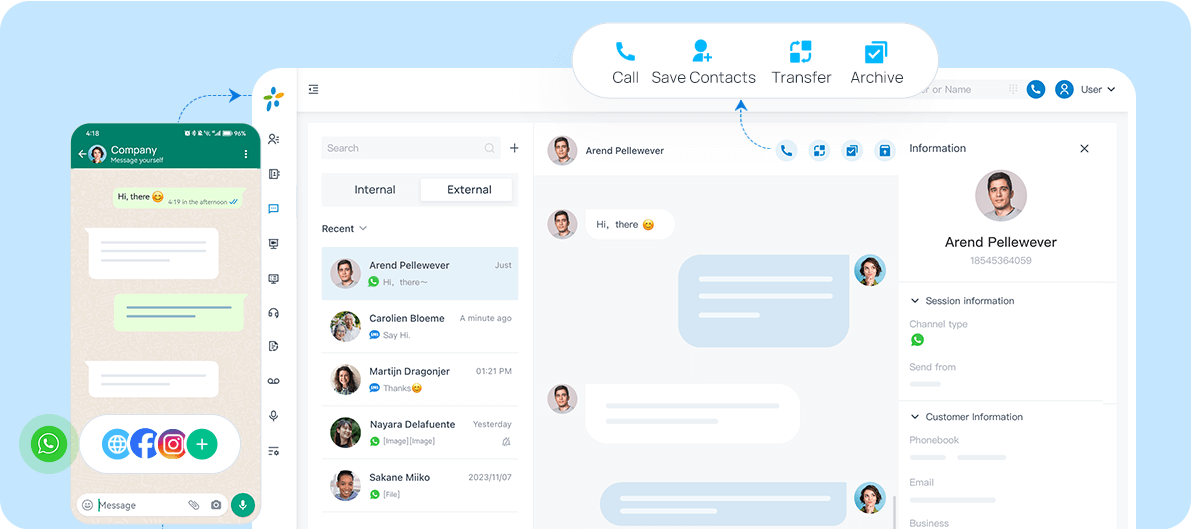
Companies in Europe may benefit from cross-platform messaging by handling customer queries from various apps via a single WhatsApp interface. This reduces workload, increases productivity, and enhances customer satisfaction.
How Third-Party Integration May Change the Future of Messaging
This update marks a turning point in messaging technology. If successful, it may encourage:
- More unified communication platforms
- Increased transparency between apps
- Less dominance by single apps
- More competition between messaging platforms
In the long term, messaging apps may evolve into interconnected networks, much like email — where users can communicate across platforms freely.
Challenges WhatsApp Faces With This Feature
While the update is promising, WhatsApp also faces some major challenges:
- Ensuring consistent encryption across apps
- Handling spam from external platforms
- Preventing abuse or misuse
- Maintaining a smooth user experience
These issues are expected to be refined as WhatsApp gathers more feedback from beta users.
Will This Feature Expand Globally?
As of now, WhatsApp has not confirmed global expansion. The company is studying:
- User feedback
- Technical performance
- Security risks
- Regulatory requirements
If other countries implement similar digital laws, interoperability may roll out worldwide.
Conclusion
WhatsApp’s launch of third-party chat integration in the European region represents one of the most groundbreaking updates in messaging history. By allowing communication across different apps, WhatsApp has taken a massive step toward open, secure, and cross-platform messaging. The feature supports essential messaging formats, provides strong encryption, and gives users more freedom and flexibility than ever before.
Although currently limited to Europe, this update may pave the way for a global shift toward unified messaging. With more improvements, added app support, and possible worldwide expansion, WhatsApp is shaping the future of digital communication.